Scientific illustrations
In 2023, I began my journey into the world of scientific illustration after receiving a commission to create life cycle diagrams and conceptual illustrations of aquatic parasites. Since then, my illustrations have featured in various published articles, marking the start of a steadily growing portfolio.
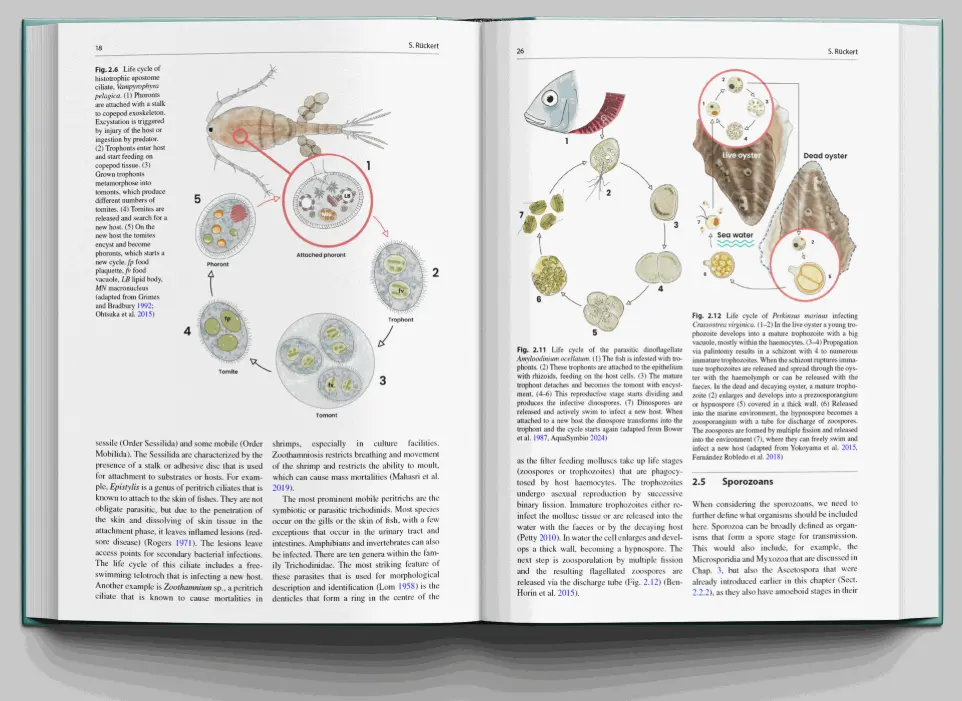
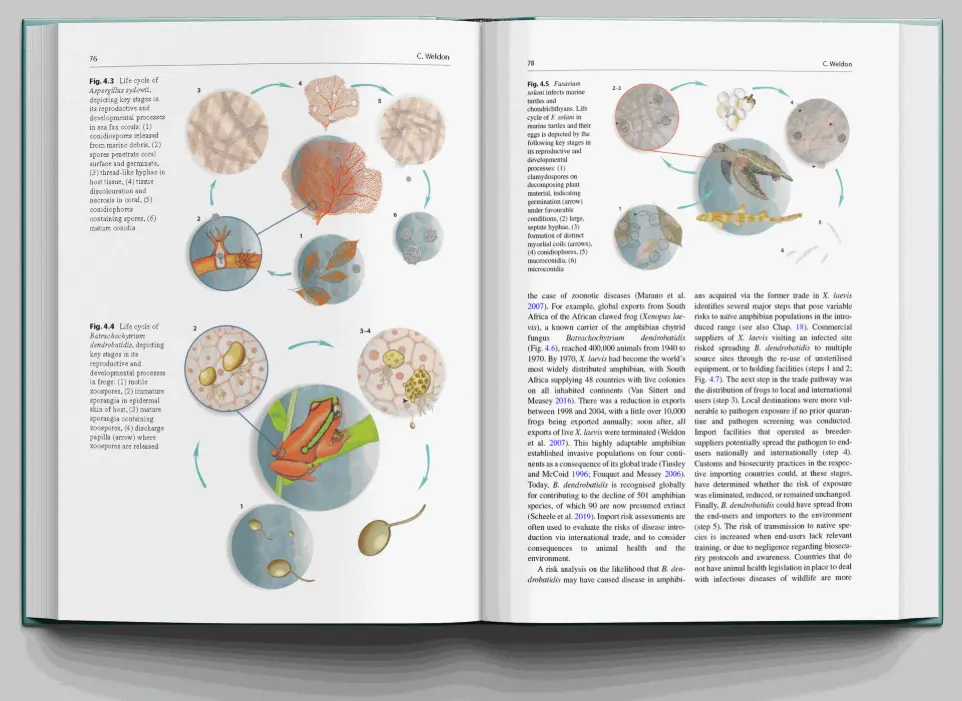
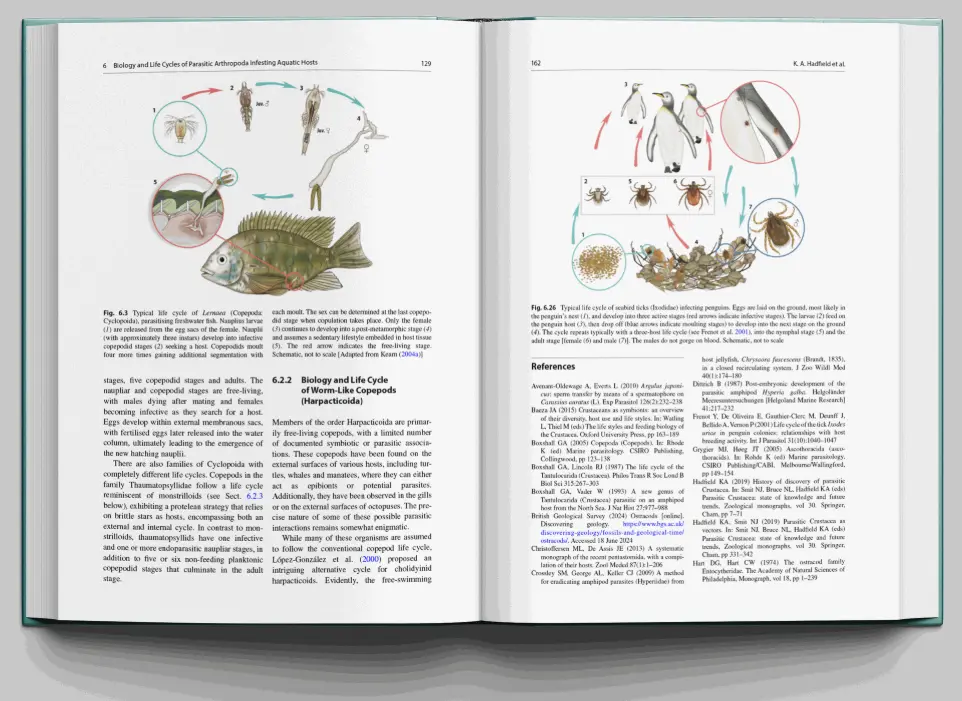
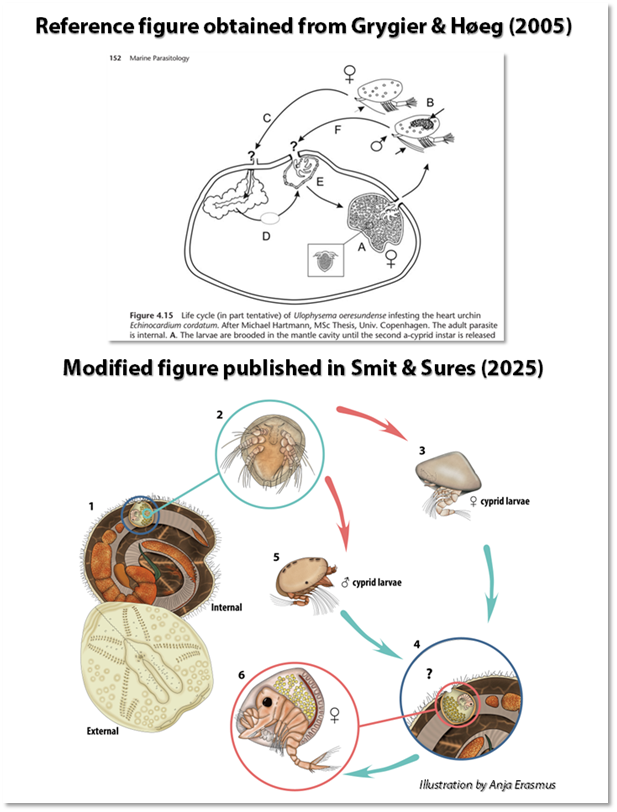
Aquatic Parasitology book – Life cycles
Client: Editors of Aquatic Parasitology: Ecological and Environmental Concepts and Implications of Marine and Freshwater Parasites, published by Springer Nature
Objective: To illustrate 27 parasitic life cycles in collaboration with the editors and authors of six chapters in this Open Access academic book. These illustrations support the educational aims of the book by clarifying complex biological processes for a broad audience of researchers, students, and educators. The book is published by Springer Nature, one of the world's largest academic publishers.
Outcomes:
- Illustrated 27 life cycles of different taxa of aquatic parasites across marine and freshwater systems
- Collaborated closely with chapter authors to ensure scientific accuracy and visual clarity
- Integrated information from peer-reviewed literature, adapted existing figures, and visualised hypothesised life cycles where applicable
- Designed figures suitable for both academic publication and educational use
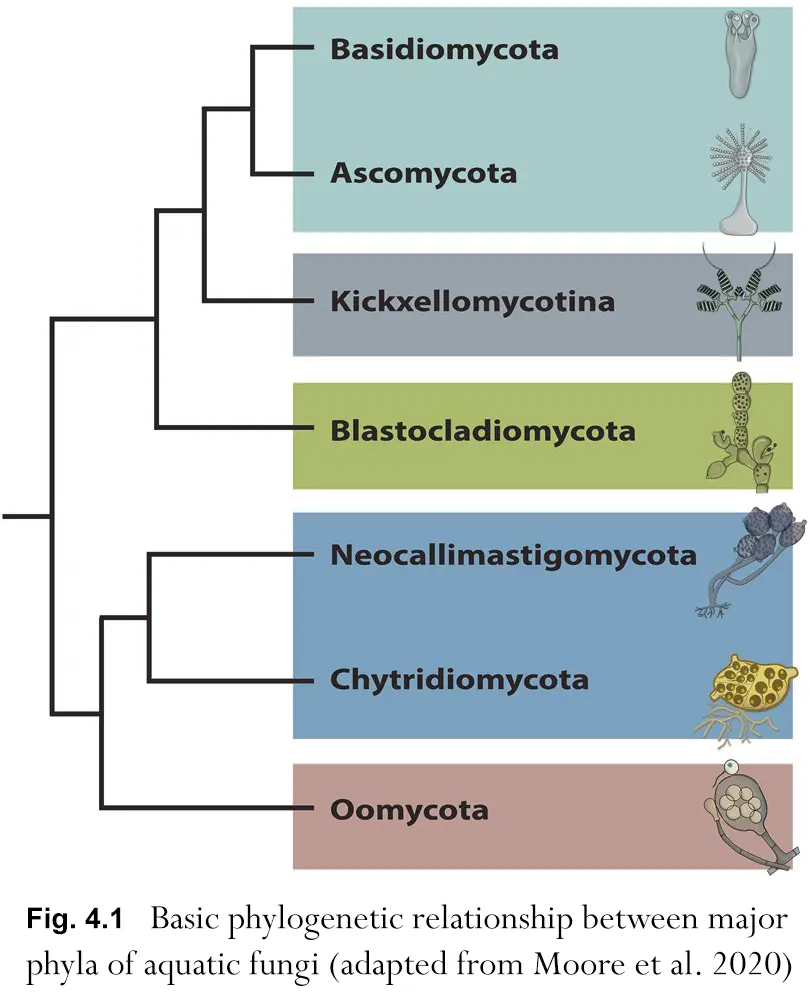
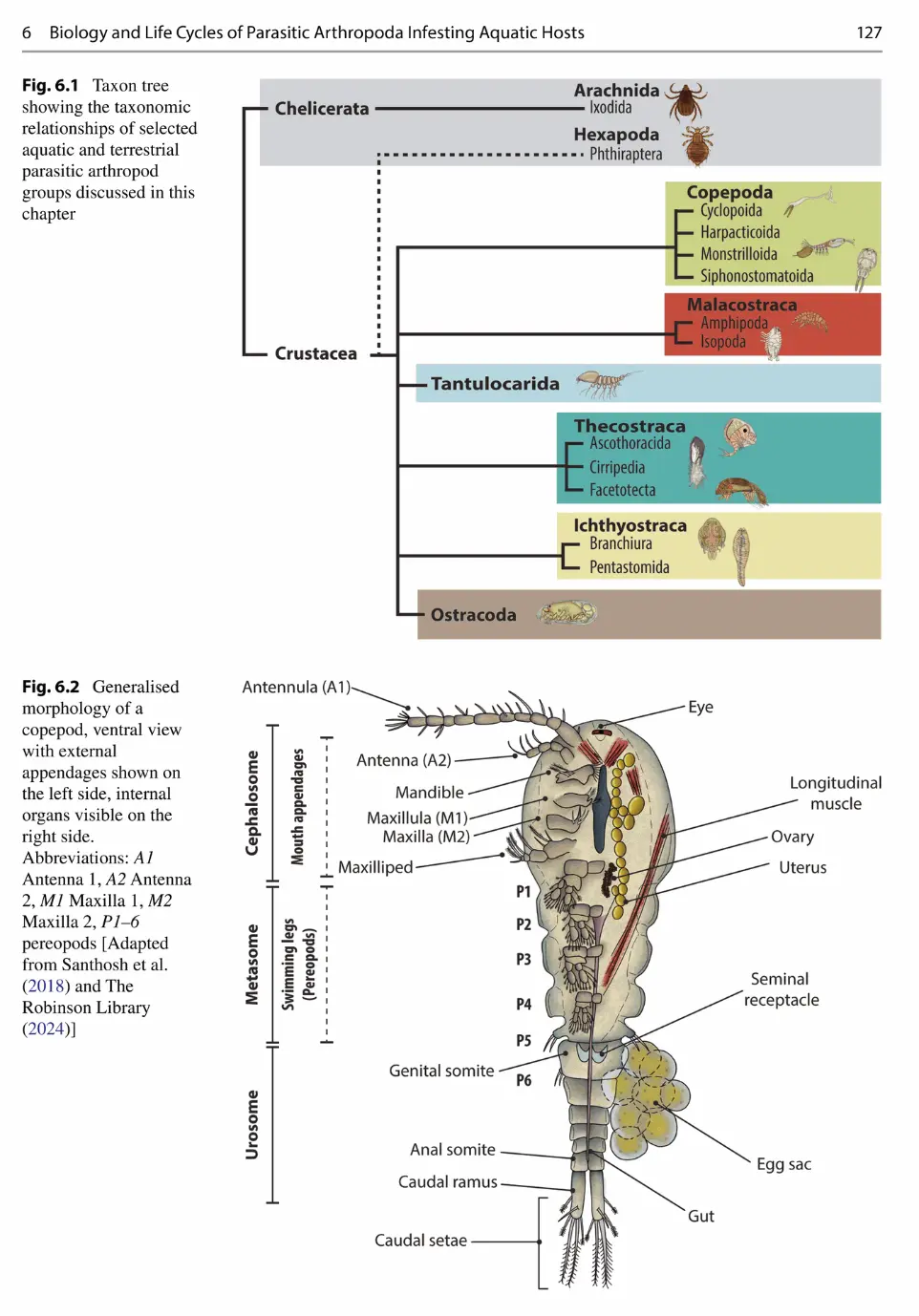
Aquatic Parasitology book – Diagrams
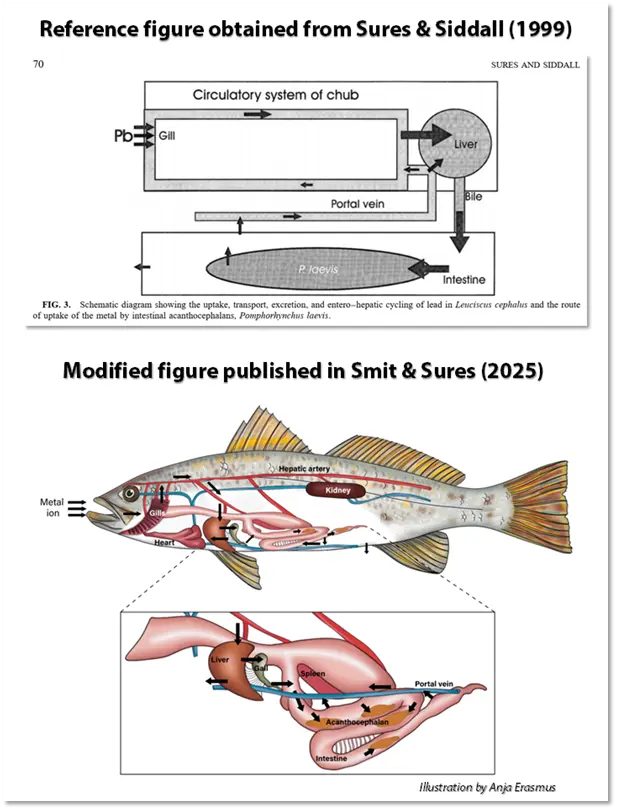
Client: Editors of Aquatic Parasitology: Ecological and Environmental Concepts and Implications of Marine and Freshwater Parasites, published by Springer Nature
Objective: To illustrate 28 diagrams, ranging from body plans to taxonomic relationships of different taxa, in collaboration with the editors and authors of ten chapters in this Open Access academic book. These illustrations support the educational aims of the book by clarifying complex biological concepts for a broad audience of researchers, students, and educators. The book is published by Springer Nature, one of the world's largest academic publishers.
Outcomes:
- Illustrated 28 diagrams of aquatic parasite taxa across marine and freshwater systems
- Interpreted information from peer-reviewed literature, adapted existing figures, and visualised hypothesised concepts where applicable
- Collaborated closely with chapter authors to ensure scientific accuracy and visual clarity
- Integrated multiple detailed organisms into cohesive, easy-to-understand visuals
- Designed figures suitable for both academic publication and educational use
Trends in Parasitology
Client: Authors of the publications
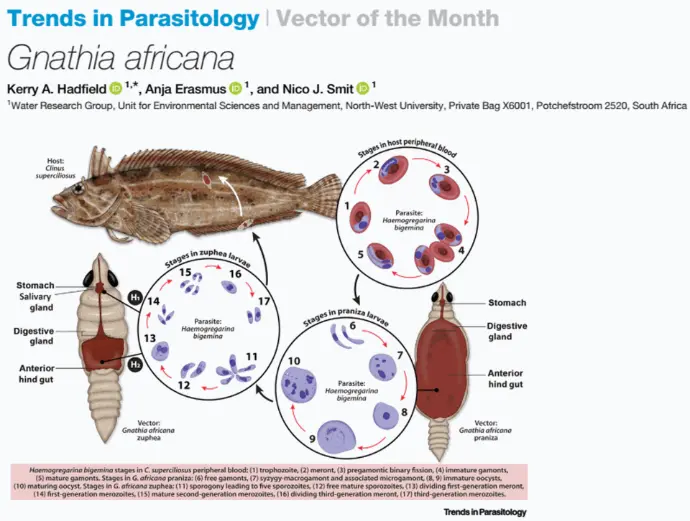
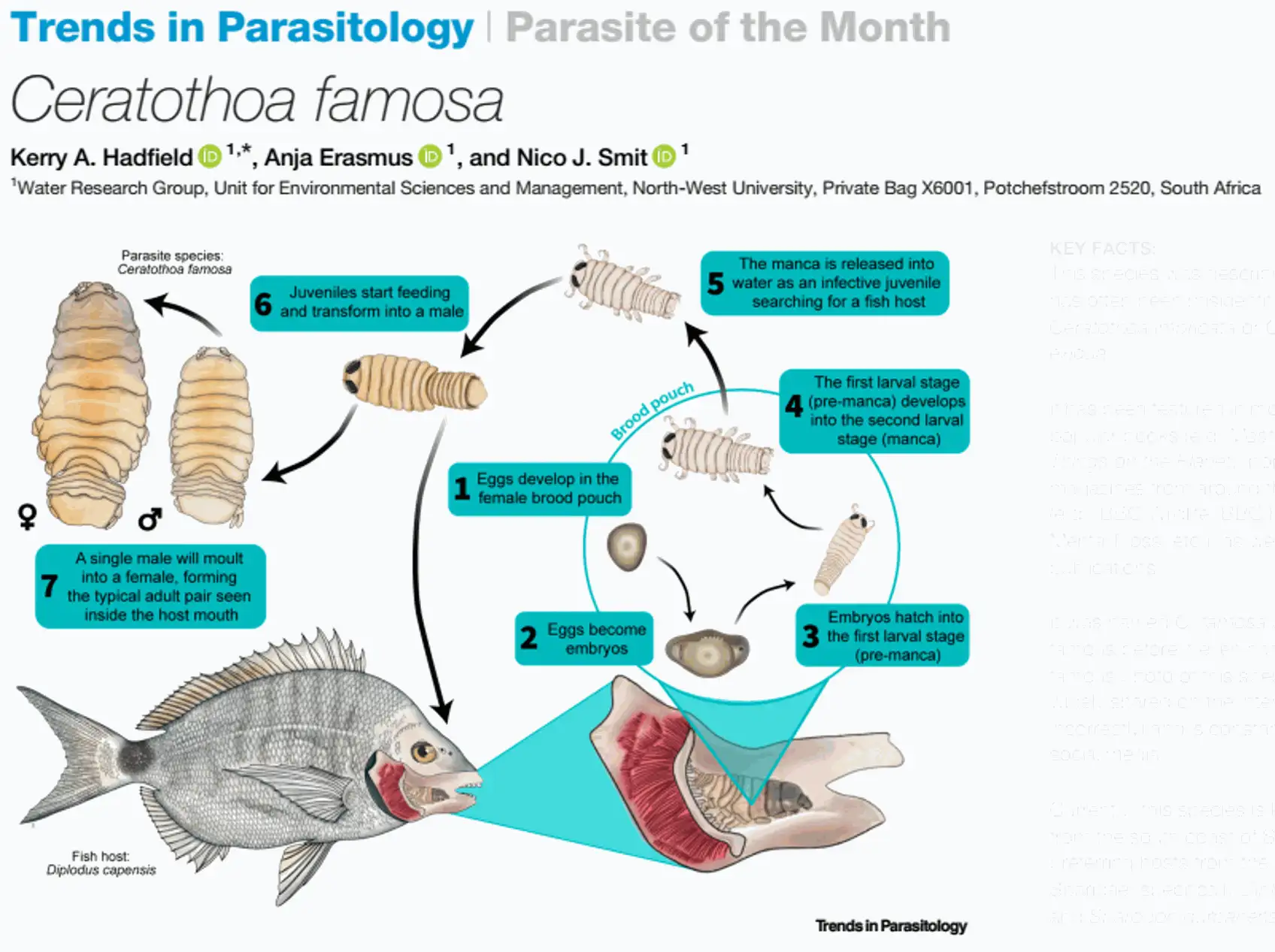
Objective: To contribute to the visual representation of scientific concepts by illustrating figures for scientific publications, in collaboration with researchers in our group. These figures are featured in the Parasite of the Month and another in the Vector of the Month segment of Trends in Parasitology (Impact factor: 7), a highly regarded international journal, reflecting the global significance of medical and veterinary parasites.
Outcomes:
- Collaborated closely with co-authors to design and produce comprehensive illustrations depicting the life cycle of specific parasitic organisms
- Transformed complex biological mechanisms into accessible visuals that complemented the articles' narratives
- Enhanced the readers’ comprehension of the subject matter
References
Here is a list of some references where these illustrations were used:
Hadfield K.A., Erasmus A., Smit N.J. (2025) Ceratothoa famosa. Trends in Parasitology: Parasite of the month, 41(3): 247–248. https://doi.org/10.1016/j.pt.2024.12.002
Hadfield K.A., Erasmus A., Smit N.J. (2025) Gnathia africana. Trends in Parasitology: Vector of the month, 41(6): 506–507. https://doi.org/10.1016/j.pt.2025.03.013
Smit N.J., Sures, B. (eds) (2025) Aquatic Parasitology: Ecological and Environmental Concepts and Implications of Marine and Freshwater Parasites. Springer, Cham. https://doi.org/10.1007/978-3-031-83903-0